
What is Yoga? How can yoga transform my life ?
Yoga is a very ancient philosophy.
It was first written in a structured format by ancient Indian Sage Patanjali, who is also known as the father of Yoga.
There are 2 significant definitions of Yoga given by Shree Krishna in the Bhagavad Geeta and by Sage Patanjali in the Patanjali Yoga Sutras.
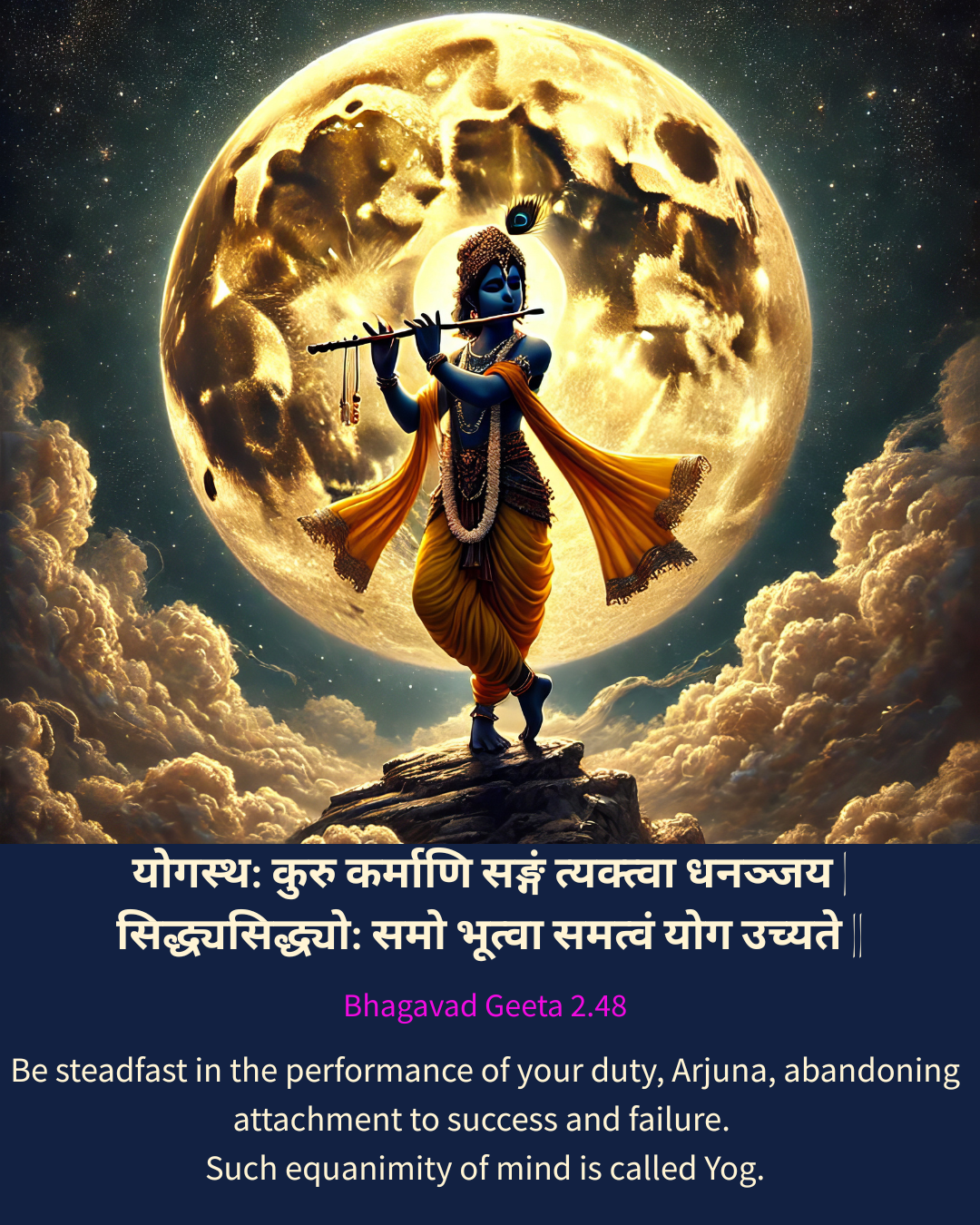
As per Shree Krishna, Yoga is the equanimity of the mind. He explains it very beautifully in shloka 2.48 of the Bhagavad Geeta.
योगस्थ: कुरु कर्माणि सङ्गं त्यक्त्वा धनञ्जय |
सिद्ध्यसिद्ध्यो: समो भूत्वा समत्वं योग उच्यते ||
Yoga-sthaḥ kuru karmāṇi saṅgaṁ tyaktvā dhanañjaya |
Siddhy-asiddhyoḥ samo bhūtvā samatvaṁ yoga uchyate ||
One should perform one’s duty as best as one can, without worrying about its consequences. Yoga is when one can accept both success and failure as equal. This equanimity of mind is called Yoga.
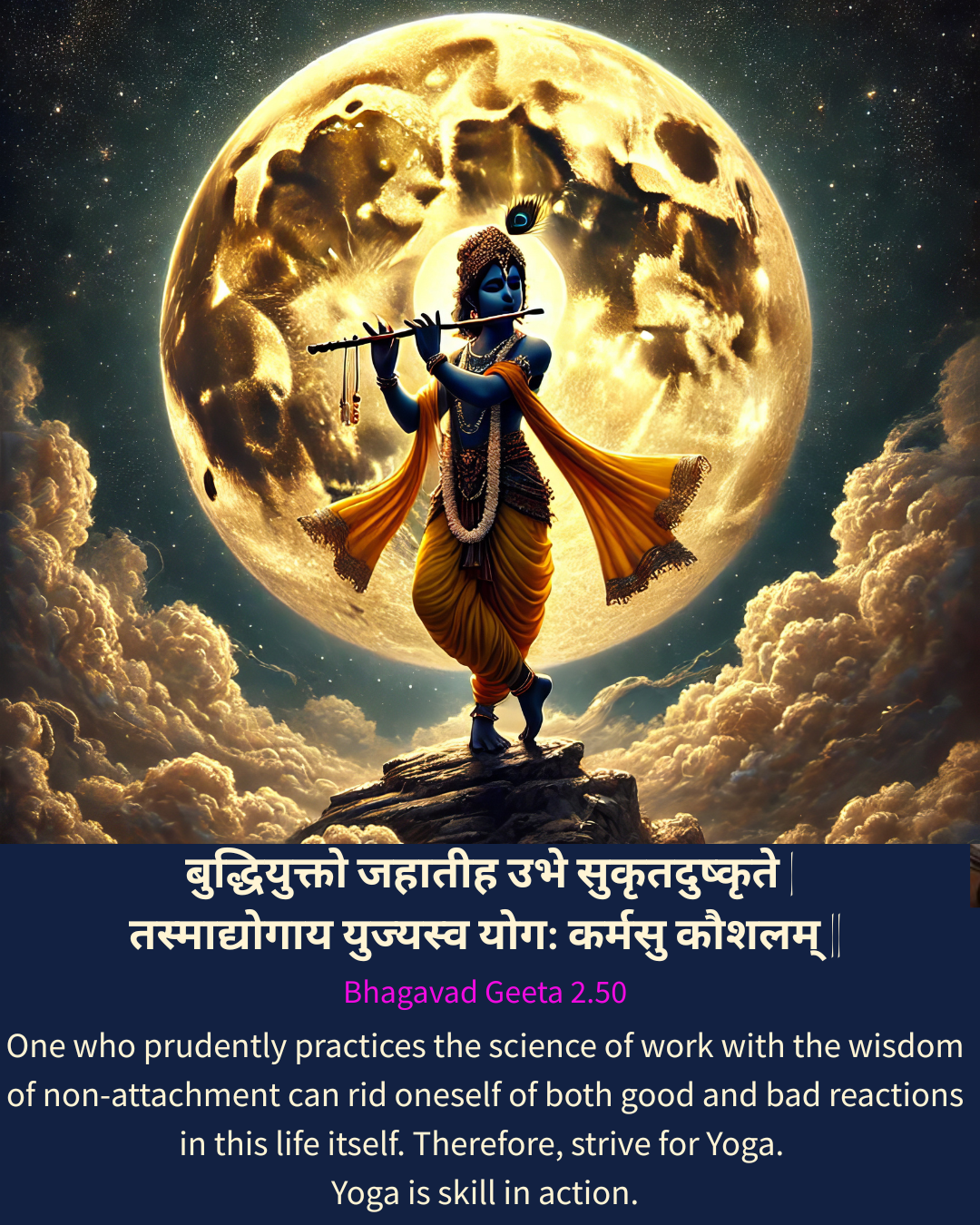
He further explains it in shloka 2.50 by saying :
बुद्धियुक्तो जहातीह उभे सुकृतदुष्कृते |
तस्माद्योगाय युज्यस्व योग: कर्मसु कौशलम् ||
Buddhi-yukto jahātīha ubhe sukṛita-duṣhkṛite |
Tasmād yogāya yujyasva yogaḥ karmasu kauśhalam ||
This means that one who prudently practices the science of work with the wisdom of non-attachment can rid oneself of both good and bad reactions in this life itself. Therefore, strive for Yoga. Yoga is skill in action.
One should rise above the duality of success and failure and perform one’s duty as skillfully as one can. This action of performing skillfully with the sense of duty is Yoga.
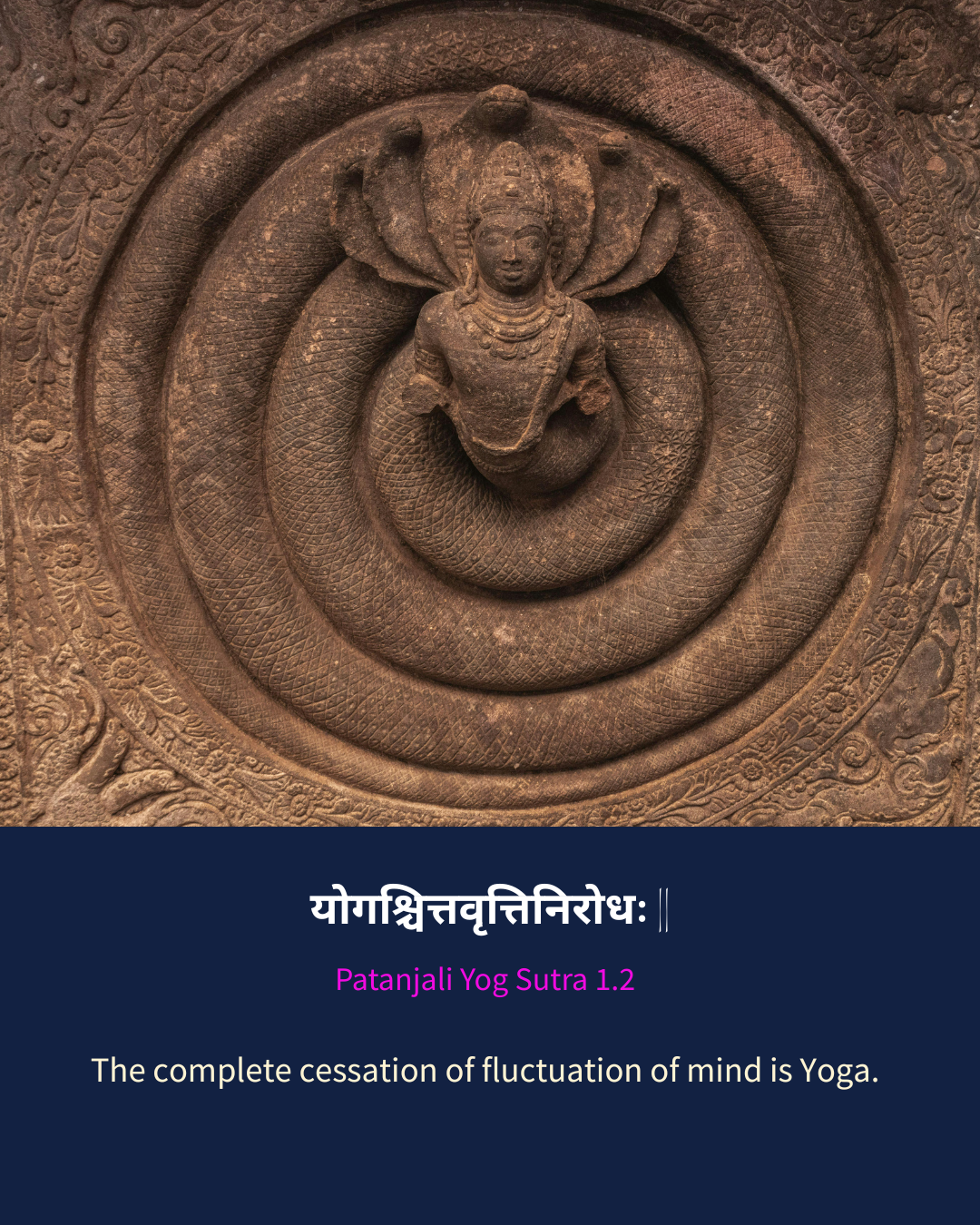
Sage Patanjali explains Yoga as the complete cessation of the mind’s fluctuations.
योगश्चित्तवृत्तिनिरोधः ||
When the mind is free of all its fluctuations, it can be in its true form.
How can Yoga help me?
Now that we know the definitions, we understand that Yoga has to do more with the mind than with the physical body.
Ancient scriptures like Patanjali Yog Sutras define asana as any pose in which one is at peace and comfortable. Because the basic objective of Yoga is samadhi. The aim of Yoga is to attain Moksha or Rajyog. Scriptures like Hath Yoga Pradipika and Gherand Samhita present us with a systematic plan for preparing our bodies to be strong and flexible, ultimately enabling us to sit in meditation for a period of time until we can attain the final objective of Yoga.
So how can Yoga help me?
The beauty of Yoga lies in the realization that even if one is not inclined towards spiritualism, one can still harness its benefits to care for one’s body and live a disease-free, pain-free life.
These are some of the important benefits for our everyday life.
1) Deep breathing practices help us get more oxygen in our circulating blood, strengthening our internal organs.
2) Pranayama and meditation help us process our thoughts in a clear and positive way.
3) Breathing practices like Anulom/Vilom, Nadi Shodhan pranayama act on our nervous system, clearing the energy pathways and activating the parasympathetic nervous system, which helps us to respond in a calm and peaceful way. (Rest and digest instead of fight or flight response)
4) Various asanas targeting specific body parts help us activate those organs by increasing the oxygenated blood supply to them. Internal organs such as the pancreas, thyroid/parathyroid glands, abdominal organs, adrenal glands, and kidneys, as well as the lungs, benefit greatly from regular asana practice.
5) Strength and flexibility of joints and muscles increase, allowing us to avoid muscle aches, backaches, and manage frozen shoulder, cervical, and spinal injuries due to lack of balance and posture. Increase our mobility and confidence to tackle everyday life’s challenges.
6) Shatkarmas are 6 kriyas: Neti, Dhauti, Basti, Trataka, Nauli, and Kapalbhati are specifically designed for detoxification of the entire body while also targeting specific internal organs to clear the body of excess mucus and fat. The main purpose is to balance the Tridoshas (kapha, pitta, and vata).
Yoga has tremendous benefits and hugely impacts the life of anybody who embarks on the journey of self-discovery and spiritualism.
Sage Patanjali has given a structured 8-step approach to ultimately attain kaivalya, i.e., absolute freedom and liberation. This approach is called Ashtanga Yoga.
To conclude, Yoga is a way of life, a lifestyle that encourages a balanced approach to life. Balance, equanimity in all our actions. Balance and moderation in eating, sleeping, relaxing, wants and desires, working, performing our duties towards society, family, and also towards ourselves. Yogic philosophy shows us how to take care of our mental, social, physical, moral, and spiritual health and live a happy, satisfied life.
For me, Yoga has given my life purpose and helped me regain my confidence. Physically, yoga has helped me stop my Diabetes medication completely, reduce my Hypothyroidism medicines, and given me a pain-free life. I lost my mother to pancreatic cancer a few years ago. Life still goes on even if you lose one of your parents. But the shadow of grief is forever with you. Yoga helped me recover from this shock and radically changed my definition of being healthy. I have promised to help myself and others lead a healthy, pain-free life.
If you are also suffering from Obesity, Diabetes, Hypothyroidism, High Blood pressure do visit my blogs on these diseases and read how Yoga can help you successfully manage them.
Related content
5 easy asanas for abdominal fat loss
5 Easy Yoga Poses for Abdominal Fat Loss Any asana should be done keeping a few things in mind to achieve its goal - Step by step approach Methodical approach Maintain structure Focus on breaths...
How can yoga help in high blood pressure
What is High Blood Pressure and how can yoga help? Imbalance in blood pressure is a disease of the circulatory system which primarily affects our respiratory system and eventually all other systems...
How can exercise and diet bring wellness to life?
How does EXERCISE and EATING HEALTHY bring wellness to life? Improves metabolism, allowing you to reach and maintain your ideal weight. Regular exercise releases endorphins (happy hormones) that...
Yogic Management of Obesity
How can Yoga help me manage my obesity? Eating more than the body requires daily is not good. Eating for reasons other then for energy is not right. In Ayurveda, it is recommended to eat...
How can Yoga help in Diabetes
What is Diabetes and how can yoga help? According to the WHO, diabetes mellitus is a chronic metabolic disorder characterized by persistent hyperglycemia (high blood sugar) caused by defects in...

What Does Fitness Involve?
WHAT DOES FITNESS LOOK LIKE? Fitness can be achieved in lots of ways. Our focus should ideally be on flexibility, muscle strength, endurance, and a healthy form. People can choose the activity that...